
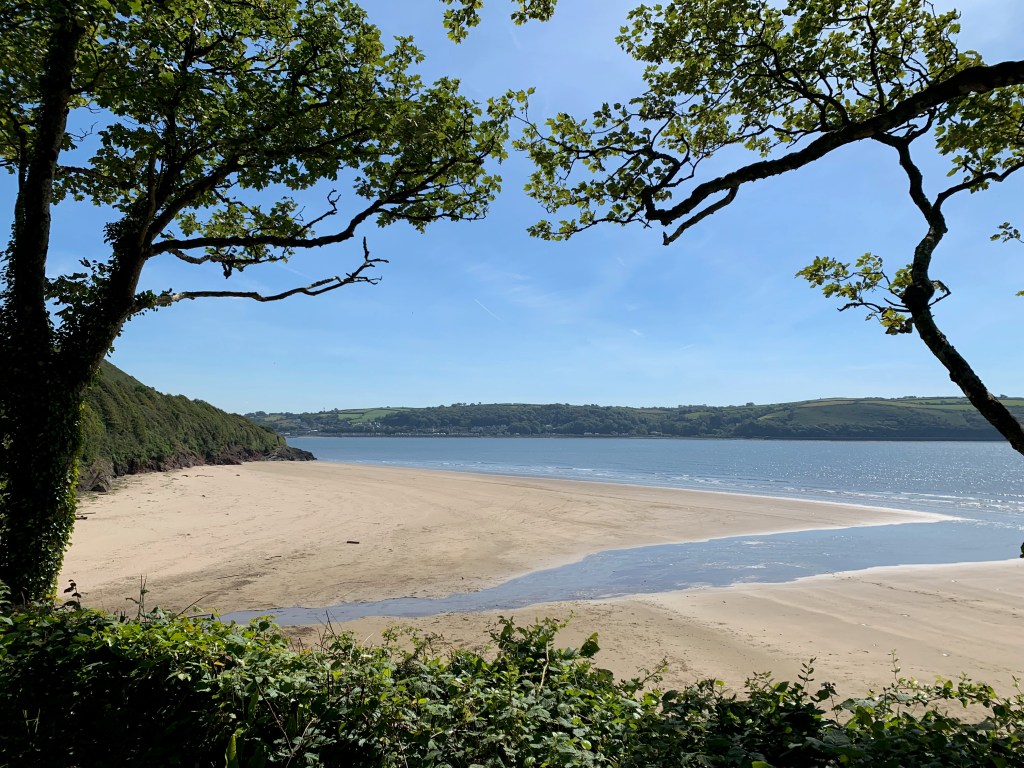
It is always a pleasure walking along the Wales Coast Path, each turn of the path brings something new, often unexpected. It is also fantastic for my little brain to be outside and not sat next to a computer. Though this last statement is more relevant to the time we walked this section, as now I am retired and trying to catch up with all the walks we have undertaken over the last 4 years. So much has happened in that relatively short period, and time is now splitting into three main categories, Pre-Covid, Pandemic and Post-Covid. This walk was undertaken in the Pre-Covid era, during a lovely sunny June day. That memory is all the more poignant now as I look through the window writing this with the daytime temperature struggle to get above 2ºC outside in January 2024. Very different to the warm June day in 2019 that I’m writing about.
The walk between Llansteffan and Black Scare on the banks of the Afon Taf is short at only approximately 7.5 miles there and back. This turns out to be an advantage as it allows you to visit Llansteffan and the Castle. Both are a delight. https://paulchallinor.com/2017/06/29/a-day-at-the-seaside-llansteffan/ We’ve been to Llansteffan a number of times and it’s very easy to spend the whole day here on a nice day. The beach is fantastic, the castle offers majestic views and there are a number of places to eat in the village. But today we were intent on completing another section of the path.
Now I have to admit perhaps that we may have cheated a little here. On the other side of the river at Ferryside the path continues up the river towards Carmarthen and then back down on the west bank of the Afon Tywi to Llansteffan. To my mangled (self-preservation) logic this means we would be nowhere near the coast, and there is still a ferry that crosses the river between Ferryside and Llansteffan. So I count that as allowable.
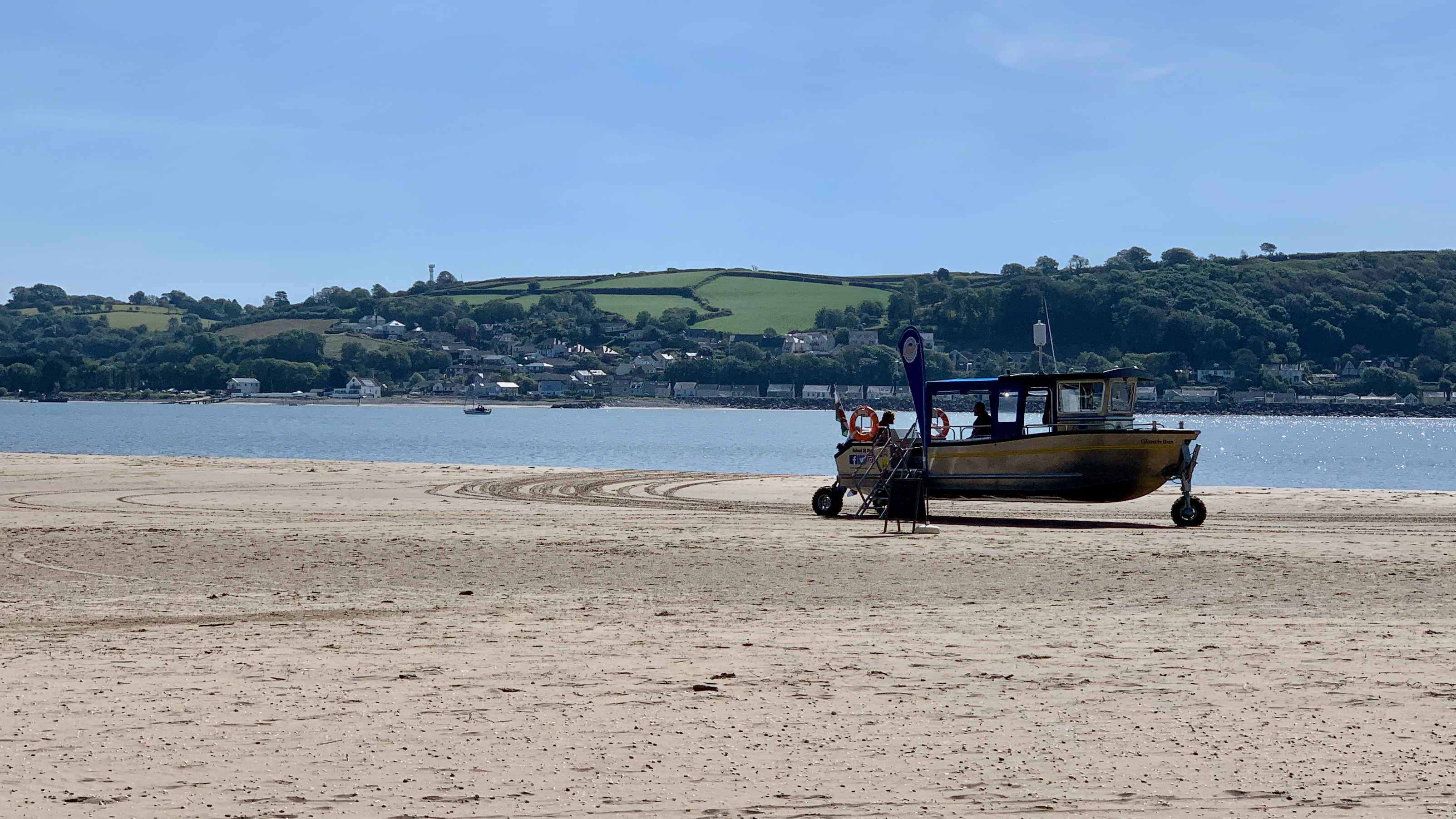
The path follows along the fantastic sandy beach bordering the Tywi Estuary until you reach a set of rock-cut steps that climbs onto a path through an old coastal forest of hazel and old twisted oak. These types of coastal woodlands are common along the coast, and we’ve come across them many times. They are remnants of ancient woodlands that are now being recognised as temperate rain forest as they receive a lot of rain fall and house many types of lichens that have now disappeared from inland areas. These small and twisted forests only remain because they are along inaccessible parts of the coast that are no use for farming.
Not far along the path you can take a short detour to visit St Anthony’s Well . A delightful small sacred well that has been well maintained and is tucked away within its own protective enclave.
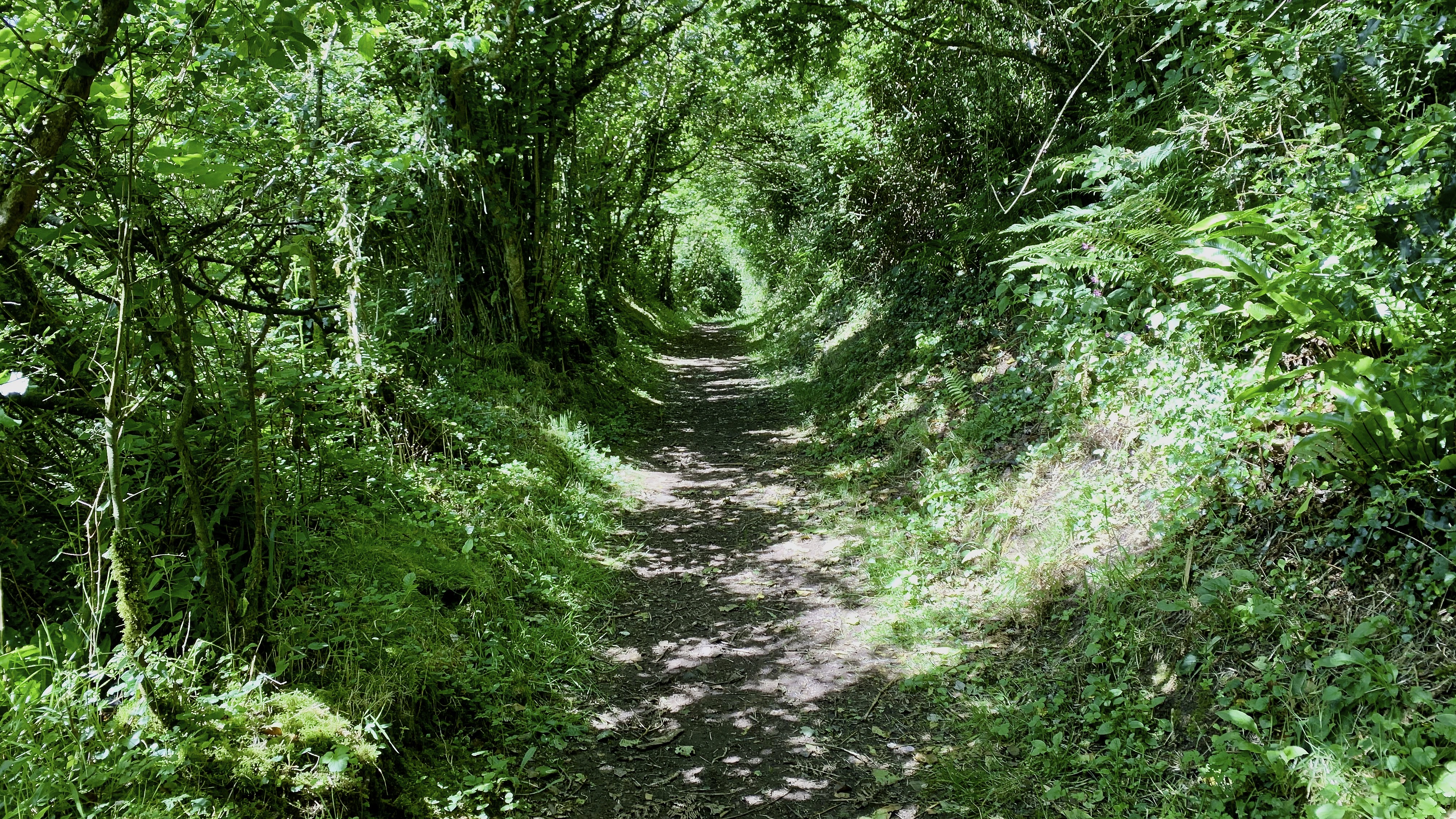
The path climbs higher through the woods offering tantalising views of the Taf Estuary, then as we turned a corner the majesty of the estuary below came into full view. The tide was receding and already there was a crowd of cockle pickers busy below.

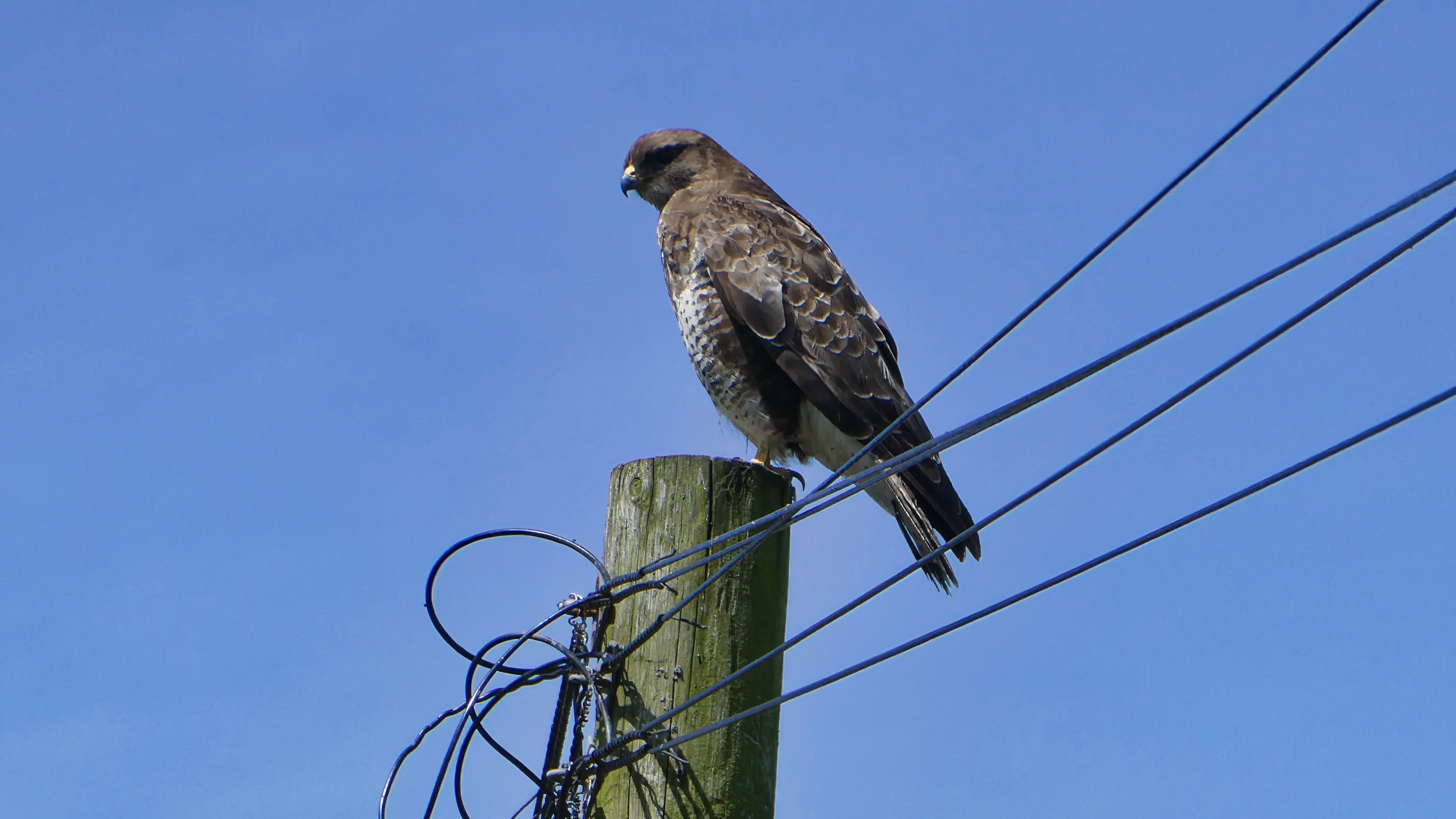
After a while the path joins a quiet country lane, almost idyllic in it’s own way being bordered by mature hedges and giving views over rate rich grazing fields that are common in Carmarthenshire. On the way out and on the return we didn’t encounter a single car. And I love that. IN fact I enjoy walking along quiet lanes as there is so much wildfire that can be seen. The Hogweed was alive with insects, and we were watched by a buzzard perched in a telegraph pole as we walked past. The road today is really a road to nowhere as it eventually reaches another ferry launch site over the Afon Taf to Laugharne. Another favourite place of ours. But more on that later.
The ferry from Black Scar no longer runs but until the late 1940’s, people travelling west could ring the bell in the Bell House to summon the ferryboat from Laugharne and take shelter should the weather deteriorate. There is only a small section of wall left as witness to the ferry. Historical records from 1891 indicate that the ferryman at that time was Lewis Roberts.  The ferry house, which likely also served as an inn for passengers, was constructed around the mid-19th century and was managed by the Morgan family in 1850, followed by the Roberts family by 1892. The last ferryman was Jack Roberts ‘Jac y Fflwcs, a fisherman from Laugharne, who used to walk around Llanybri selling his fish and crying “Fish all alive-oh!” The Roberts family lived in Ferry House next to the Dylan Thomas Boat House from the 1890’s to 1958 when the ferry ceased to operate.

The walk bar towards LLansteffan was an equal delight to the onward walk. Sometimes retracing your steps gives a different perspective to a walk.

 Travels With My Aunt
Leave a comment