
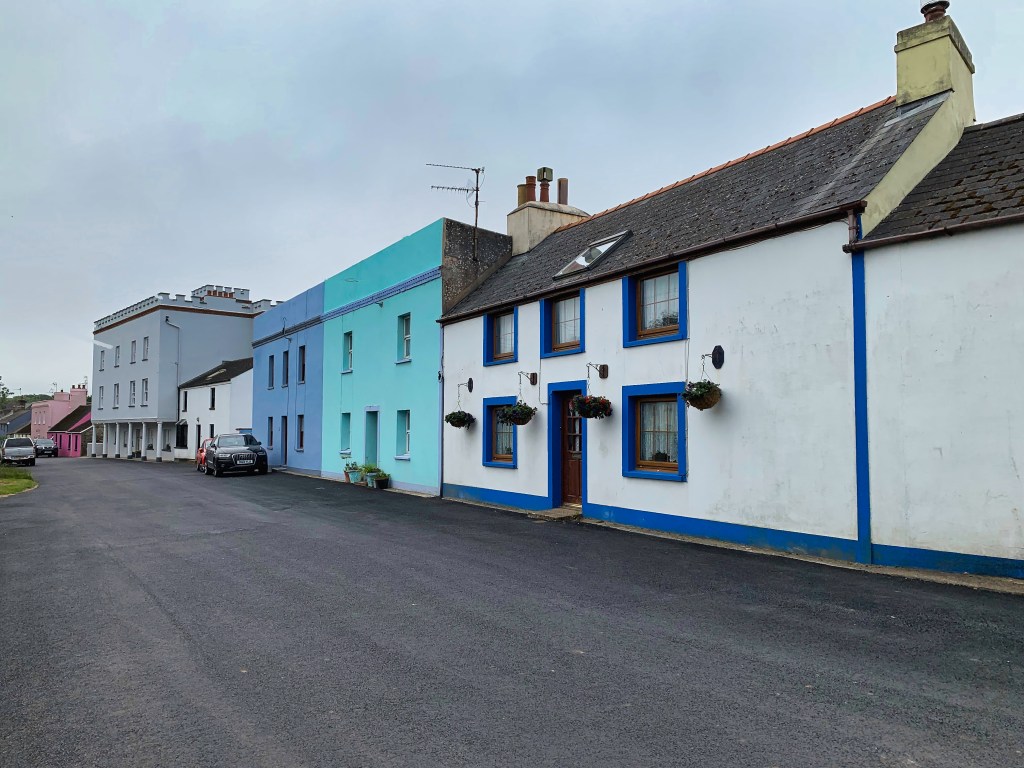
I have to start with a self congratulatory statement, though this may come back to bite me at some time in the future. Over the course of walking the Wales Coast Path Aunty and I got quite the good with the local bus services, the only challenge first thing in the morning is finding somewhere to park the car and then catch the bus to our starting point. However, due to the Welsh Government cost cutting a number of the advertised bus services no longer existed when we walked this section. So after driving to Angle we caught the bus back to Pembroke, and then walked back to Angle. Now when I read that back it seems to be a pointless exercise, and in many ways I suppose it is. We’re walking the path because we can, not because we have to. And I do like doing things because we can, and not because we have to, it makes life a little sweeter. The paths around the sea ports of Milford Haven are a real juxtaposition of modern high technology industry and history. The oil refinery on one side of the haven look directly at the refinery and natural liquid gas storage areas on the other side. The coast is lined on both sides by impossibly long quays, and equally impossibly long ships and tankers. But more of that later.
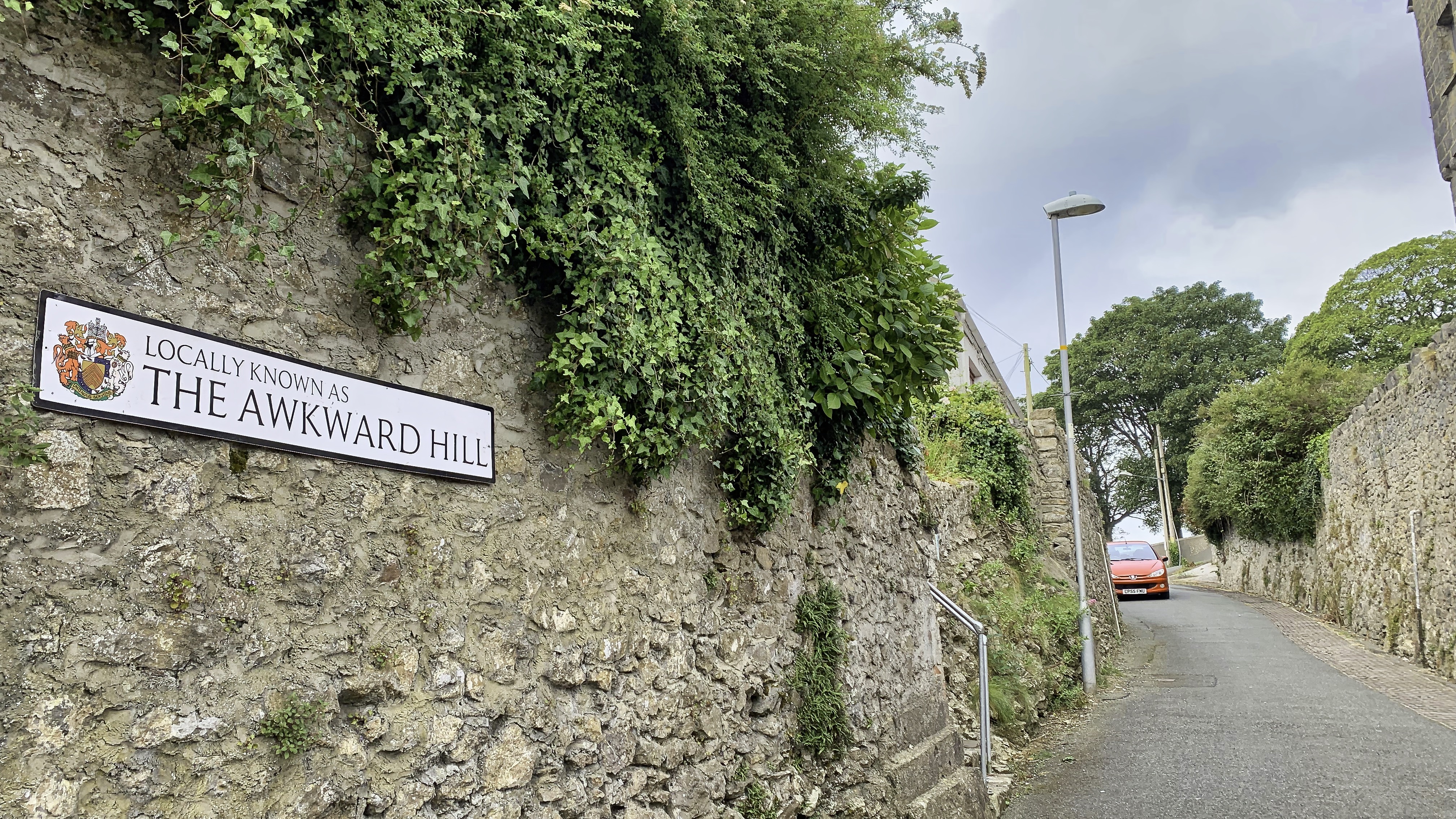
It didn’t take long to leave Pembroke behind, but not before walking up a short steep street apply named Awkward Street. What a great name! I’m not too sure of the origins of the name, but it may relate to it being narrow and steep. At the top of the hill is the Priory Church of St Nicholas & St John. This church is the oldest in Pembroke and was part of an 11th-century Benedictine priory, built on an even earlier Christian site. Despite the suppression of the priory by Henry VIII, the church survived and continued to serve the people of Pembroke. During the 1648 Siege of Pembroke, Oliver Cromwell set up his cannon in the churchyard to cover the castle opposite. From here the path quickly descended
The path here passes close to the muddy shoreline where it was humid and not a little sticky while walking. Perfect habitat for biting flies, and boy did they bite. We were plagued for a while by Clegs, small horseflies, and the females seemed to take great delight in ambushing us, determined to get their pint of blood. Aunty was not amused when I tried to point out their beautiful and colourful eyes. Out came the fly repellant, followed by a demand that we restock immediately the walk is finished. And so later in the day after a trip to the supermarket we had enough material to be classed as carrying weapons of mass destruction, and on subsequent walks we must have left a visible stream of chemicals trailing behind us. Aunty was determined not to be bitten again.
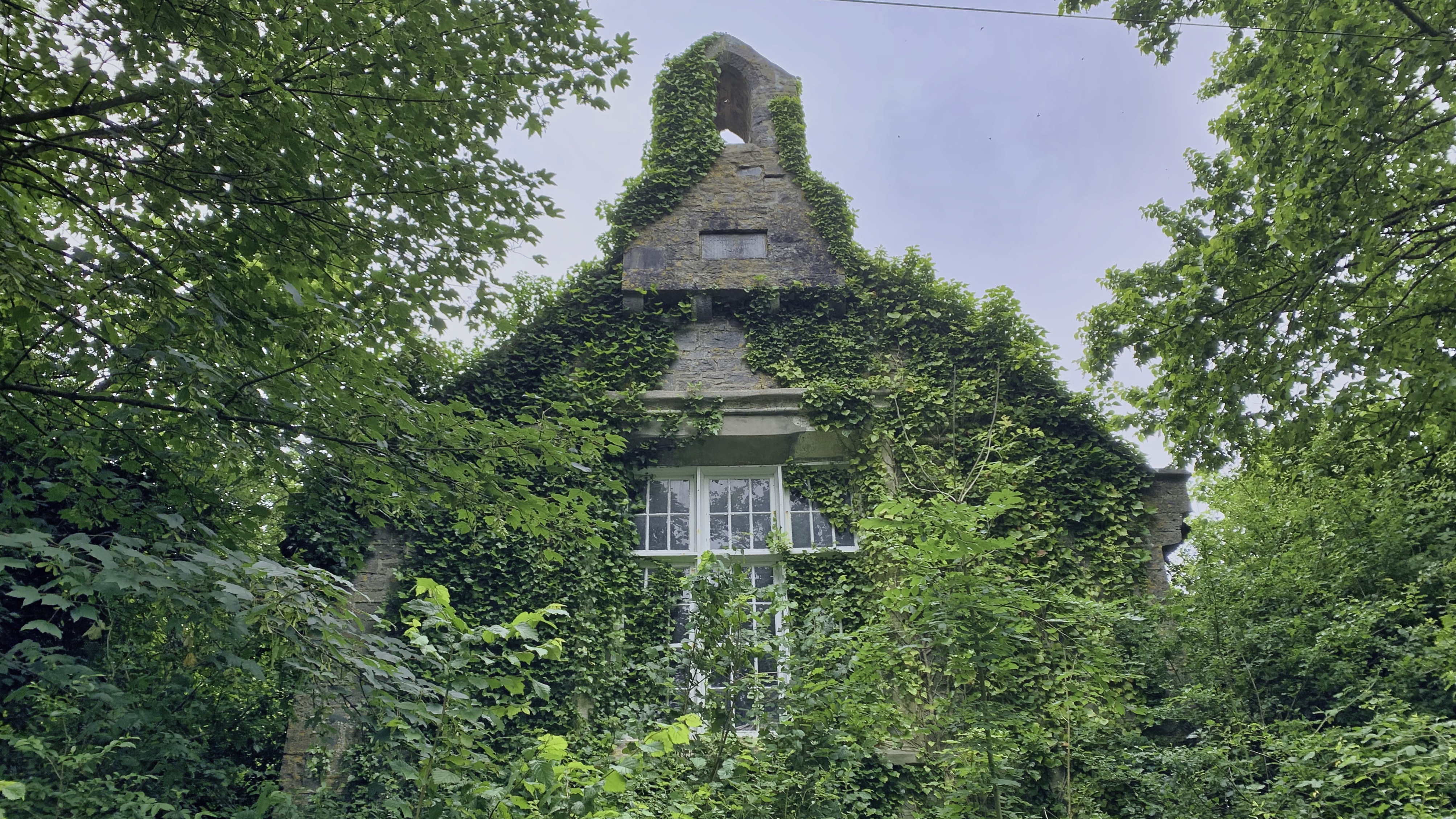
Perhaps the most surprising part of this walk was coming across Rhoscrowther Church down a narrow and over grown lane. It is hidden away behind high hedges, and nestles underneath the towering chimneys of the refinery behind. There used to be a small village here, and the ruins of the old school peek out of the shrubbery. However following an explosion at the refinery in 1994 the village was evacuated and then abandoned. The church is dedicated to St Decumanus, a local man who sailed away across the Severn Estuary in a coracle to live a hermits life on Exmoor. No Tv in the evenings I supposed so why not! But he died a martyr in 706 ‘at the hands of a truculent fellow who cut off his head with a spade’. He obviously upset the locals at one point. The original name of the village was Llandegman. This is an early Christian site and was once the bishop-house of the cantref of Penfro. A cantref was an ancient administrative district which original divided up Wales into areas containing 10p households. The church is no longer in active service and is looked after and maintained by the charity Friends of Friendless Churches. Just behind the church is a small wetland nature reserve, the perfect spot for an uninterrupted lunch.
Rhoscrowther Wind Farm Limited had wanted to build five, 100-metre tall, wind turbines within sight of the church. It said the site in Refinery Road, Hundleston, close to the Valero Oil Refinery, is ideal for renewable energy generation. But Pembrokeshire County Council disagreed and its refusal of planning permission was last year upheld by a government inspector.
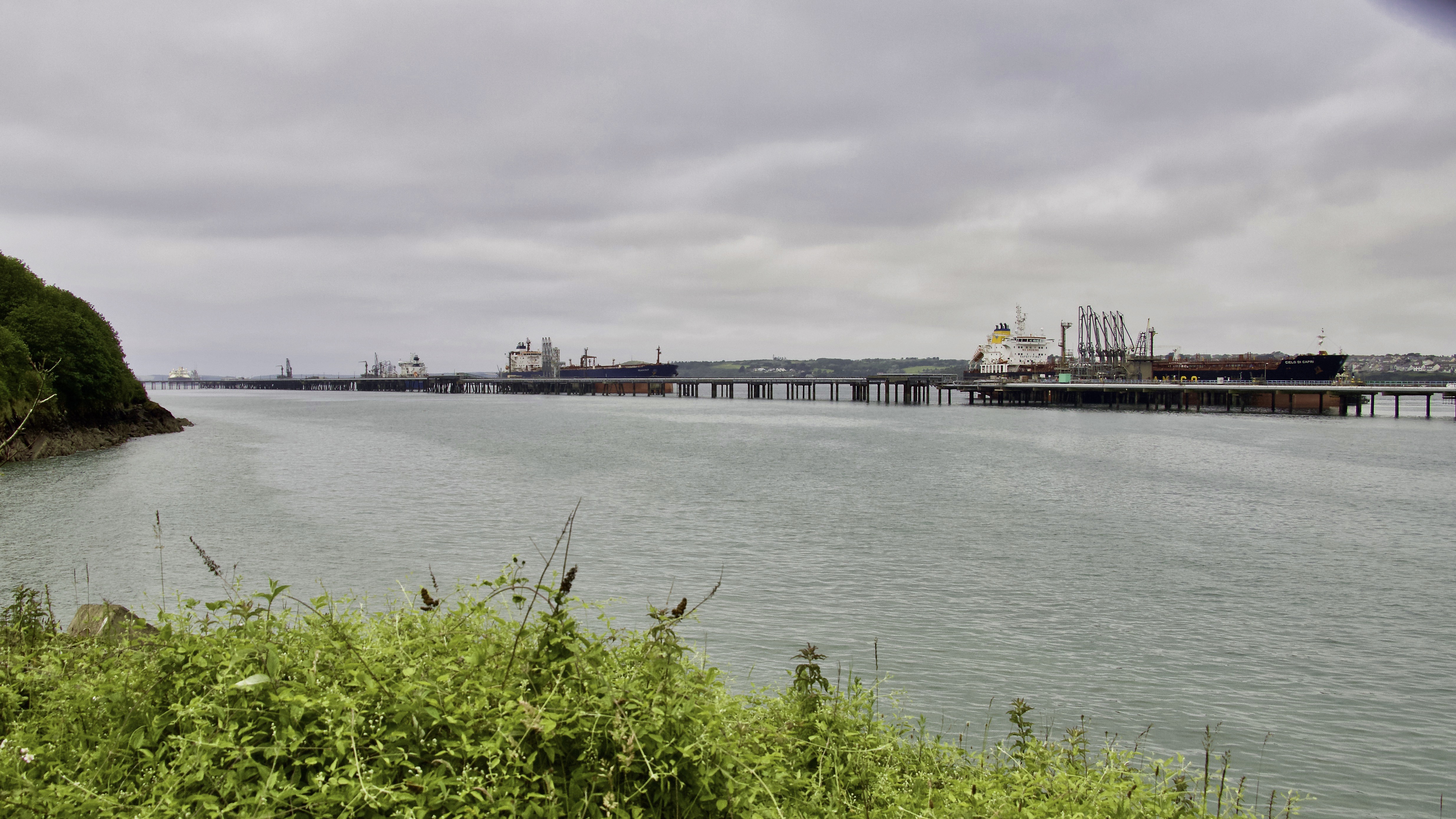
After skirting around the oil refinery we arrived back onto the coast. This whole of the peninsula is dominated on land by the Pembroke Oil Refinery, but along the coast the quays whee the big ships line up to discharging and refilling their cargo holds draws the eye at all times. We have to acknowledge that we live in a society and culture that is dominated by the need for oil and it’s by products. We may not like it, we recognise the need for change and change is occurring, but to see these huge ships lined up along the 2 mile long quay brings it home. As we were walking along the path parallel to the quay one of the ships was making ready to leave. The tugs and ship blew their horns (do ships have horns?) in farewell and slowly, gracefully The Cielo di Capri drifted away, turned a full 180 degrees and was escorted out of the Haven by the tugs. The wonder of the internet allowed me to do my geeky thing and find out about that the Cielo di Capri is a chemical/oil product tanker and it’s next port of call would be Donges, France.
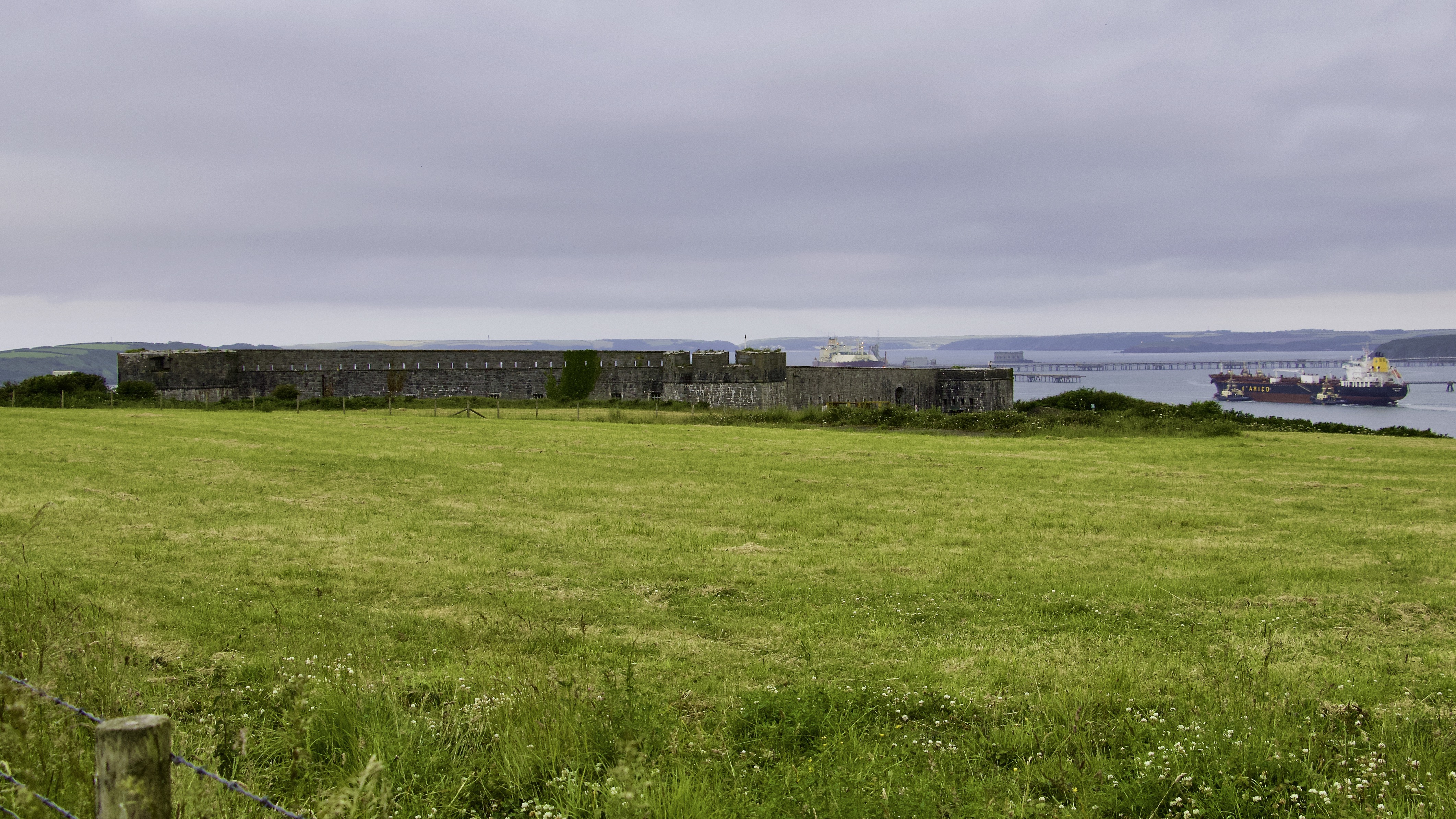
Further along the path we came across the hidden and seemingly buried into the hillside, Popton Fort, which together with the fort at Hubberston on the opposite side of the bay created an inner second line defensive ring of forts designed to protect Milford Haven from a threatening invasion by Napoleon. Construction work commenced in 1859 and the fort was completed by 1864. Although it seems to melt into the landscape this was a formidable fort in its day, housing 2 batteries of large guns. The barracks to the rear could accommodate 260 men, with all the other necessary buildings to support such a sizeable contingent, a small hospital and importantly a canteen. BP bought it in 1957 when they built the refinery nearby, and it was sold to Texaco along with the refinery, so unfortunately it’s not possible to mooch about in the interior.
The last section of the walk includes a gentle stroll around Angle Bay, though it did seem we were on this section for a long time. Angle Bay is aptly named and gets its name from Vikings who found it a useful place to shelter in stormy weather. The shape of the bay really is an angular corner or nook creating a safe anchorage. When the tide goes out here, it really does go out leaving a vast expanse of estuarial mud and sand where shell fish flourish and attract a wide variety of waders. But alas we had no time to spend bird watching, it had been a hot and humid day and the pub in Angle was calling loudly.
Around the back of the pub hidden by the headland is the lifeboat station which was involved in a famous rescue when The Loch Shiel was wrecked around midnight on 30 January 1894. Shipwrecks were a grim fact of life along Wales’s wild coastline, even in the supposedly modern age of steam and iron. But this was no ordinary wreck. As the storm eased and the waves retreated, the beaches revealed a treasure that would make legends overnight: thousands of cases of whisky. The iron-hulled barque had left Glasgow bound for Australia, carrying a mixed cargo that included some 7,000 cases of 100-proof whisky. She never made it far. Caught in force-eight westerlies, the captain tried to seek shelter in Milford Haven, but around midnight the ship struck the rocks of Thorne Island and was quickly broken apart. Thanks to the bravery of the Angle lifeboat crew, all 33 aboard were rescued, several lifeboatmen later earning RNLI silver medals.
What followed was chaos of a very different kind. With customs officers miles away, news of the cargo spread like wildfire. Locals flocked to the shore—children included—while carts and small boats spirited bottles inland. Newspapers spoke of “scenes of debauchery”, of fields and cottages awash with illicit drink, and villages where whisky punch flowed freely. Only a fraction of the cargo was ever recovered. Even today, the broken remains of the Loch Shiel lie beneath the sands off Thorne Island, occasionally yielding bottles, lamps, and echoes of a night when the sea delivered far more than wreckage. A Welsh version of the film Whiskey Galore, one of my favourite films. Go and watch it!
Date walked: 29 June 2019
 Travels With My Aunt
Leave a comment