
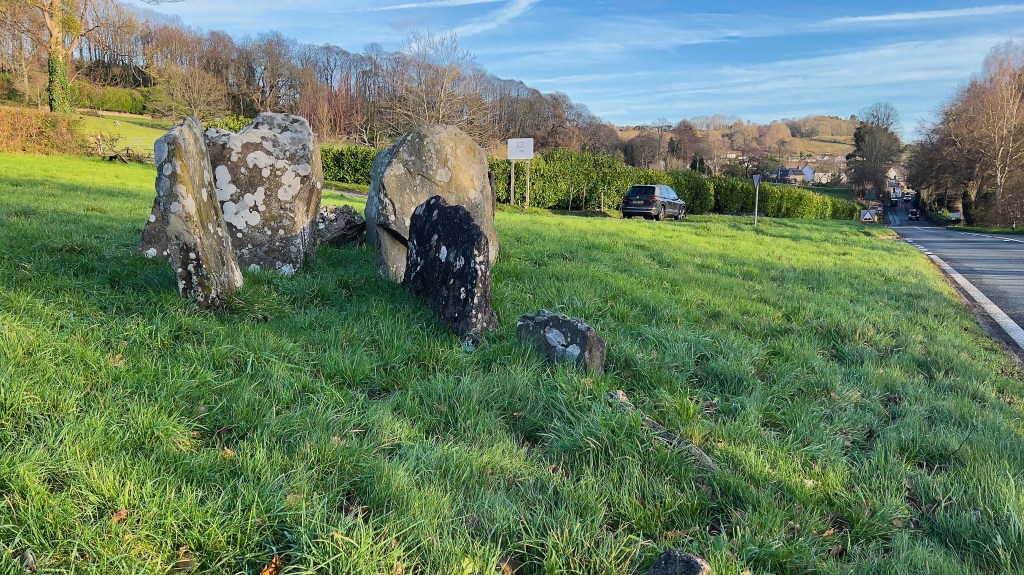
In my rather simplistic view of the world Neolithic burial chambers are not only enigmatic structures and but are also situated in prominent parts of the countryside. Often in places that seem isolated today, and way from the trappings of the urbanised life we inhabit in the 21st century. But my naive view of the world is not always reflected in reality. If you drive along the A40 in either direction between Abergavenny and Brecon, just outside Crickhowell you’ll find a slice of deep prehistory right beside the modern road: the Gwernvale burial chamber.
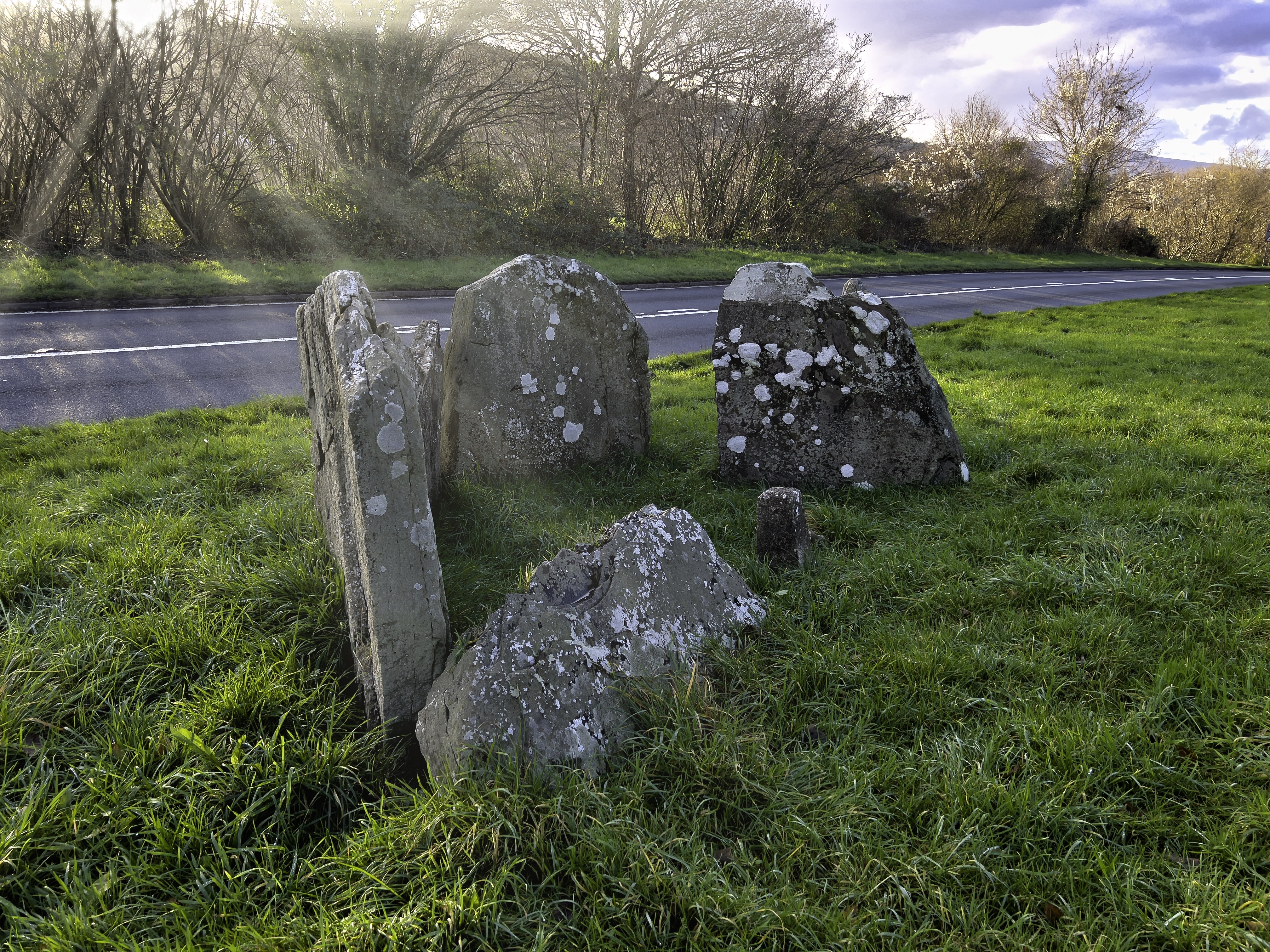
This neolithic chamber is not the dramatic, perfectly preserved monument you see shown on postcards of places like Pentre Ifan or even Tinkinswood, but that’s part of its charm. Right on the edge of the road all you’ll find is a truncated, weathered long cairn with a few upright stones (orthostats) poking through the turf. But these upright stones hint at a time when people shaped the landscape with enormous, communal acts of memory. Standing there, with the Usk valley dropping away and the Black Mountains sketching the skyline, you’re looking at a place that once held people’s dead, their rituals and their stories. Unfortunately these stories are long lost, and we can only use our imagination to guess what their lives and beliefs were.
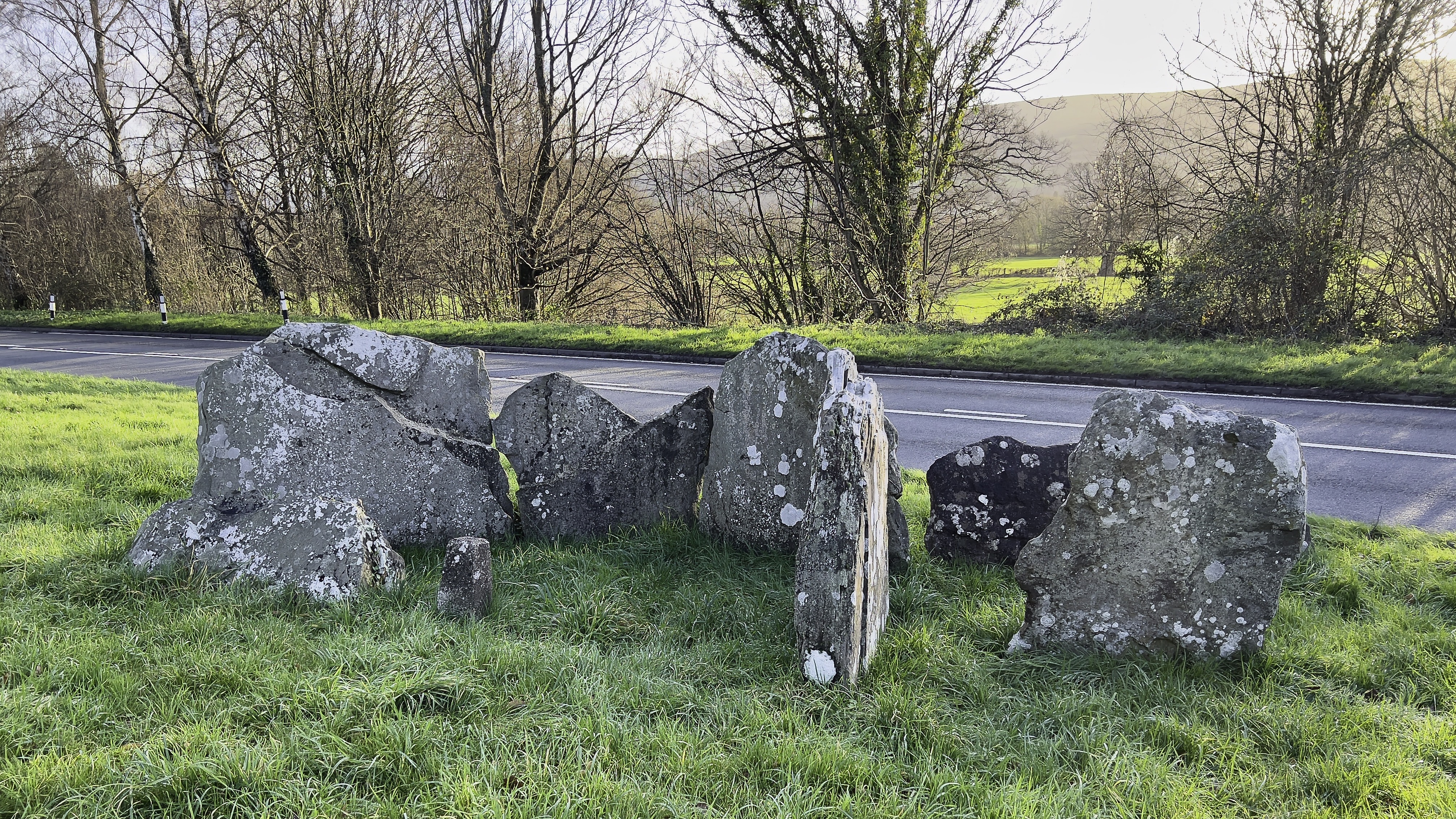
Auntie and I were driving back from Tretower Court when I decided it was time to stop and have a look at this enigmatic group of stones. This did involve a hand brake turn off the busy road into a very small lay-by next to the entrance into the nearby hotel Gritted teeth and burning brakes took us into the tiny space and a slight expletive from Auntie I jumped out of the car to have a look.
Gwernvale is best located on a map by its Ordnance Survey grid reference (SO 211 192) — roughly 51.866°N, 3.147°W — on the northern fringes of the Black Mountains. Its siting must be deliberate, on a low ridge position just as the side of the valley start rising from the river Usk. Although not on a prominent hill it’s position does provide clear visual links down the valley and across neighbouring ridgelines. That visibility must have mattered. Neolithic long cairns like Gwernvale likely functioned as more than tombs. They were landscape punctuation marks, communal investments that asserted presence, memory and, perhaps, ownership across generations. There were reasons why the community was involved in the many hours required to build these monuments within the landscape.
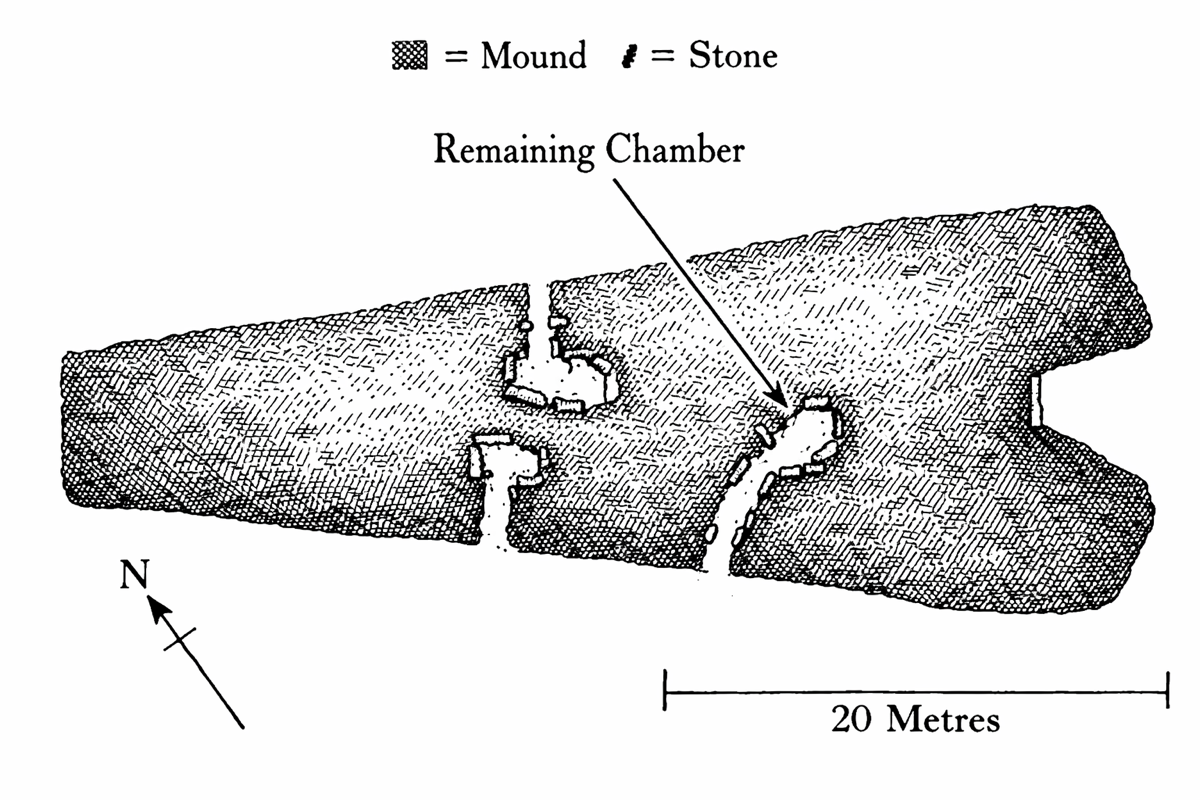
Archaeologically, Gwernvale belongs to a family of monuments often linked in Britain with the Cotswold–Severn and lateral-chambered traditions — stone-built chambers set into a long, trapezoidal cairn, sometimes with horned forecourts and multiple side chambers. Excavations conducted in the late 1970s as part of rescue work for road realignment exposed several of the surviving chambers and orthostats and recovered pottery sherds, worked flint and organic samples suitable for radiocarbon dating. Those dates, and the general pottery and construction details, place Gwernvale comfortably in the Neolithic — broadly the early to middle Neolithic centuries, several thousand years ago, when communities across Britain were starting to build long-term monuments and to practise collective burial.
Even though the mound has been heavily truncated following 19th-century antiquarian removals, and compounded by 20th-century road works, the remains still speak of a complex building process. Imagine rubble and carefully placed stone blocks forming a long cairn, orthostats rising to create chamber walls, and capstones originally sheltering the burial spaces. The chambers were laterally accessible (from the side of the mound) rather than from a single end, a trait that archaeologists read as reflecting particular ritual practices: repeated, collective deposits rather than single, individual burials. Excavators recorded evidence that the chambers were used over an extended period, with multiple depositional events and episodes of deliberate blocking or sealing — the sort of long-term, communal use that builds social memory.
Finds were modest but telling: Neolithic pottery types, flint working debris and small artefacts now catalogued in regional collections. Where organic material survived, radiocarbon samples helped anchor Gwernvale within the wider chronology of Welsh cairns. Equally important were the negative evidences: the pattern of truncation and later disturbance that reminds you how fragile these monuments are, and how modern life has repeatedly repurposed ancient places. Half of Gwernvale’s story is visible; the rest lies under the carriageway or has been lost to time.
There is evidence that this area has been occupied for thousands of years. Britinell has reported radio carbon dating from charcoal found in a hearth has been associated with late mesolithic flint work dating to around 4945 BC. Other charcoal from beneath the burial tomb has been dated to 3100 BC, and from pits on the southern side if the tomb is contemporary with the date of the building of the tomb around 2640 BC. A mind boggling time scale.
Standing at the site, if you ignore the traffic thundering past just feet way, it’s easy to imagine how Gwernvale functioned within a network of nearby tombs and cairns across the Breconshire hills. It wasn’t an isolated act: there are other chambered cairns and long mounds within sight or a short walk away, all variations on a shared set of ideas about ancestorhood, landscape and ritual. Together, they form a funerary landscape — markers that could delineate territories, provide places for communal ceremonies, and anchor stories of descent and belonging. The architectural effort alone implies social organisation and cooperation: groups who could marshal labour, share architectural knowledge, and sustain practices across generations.
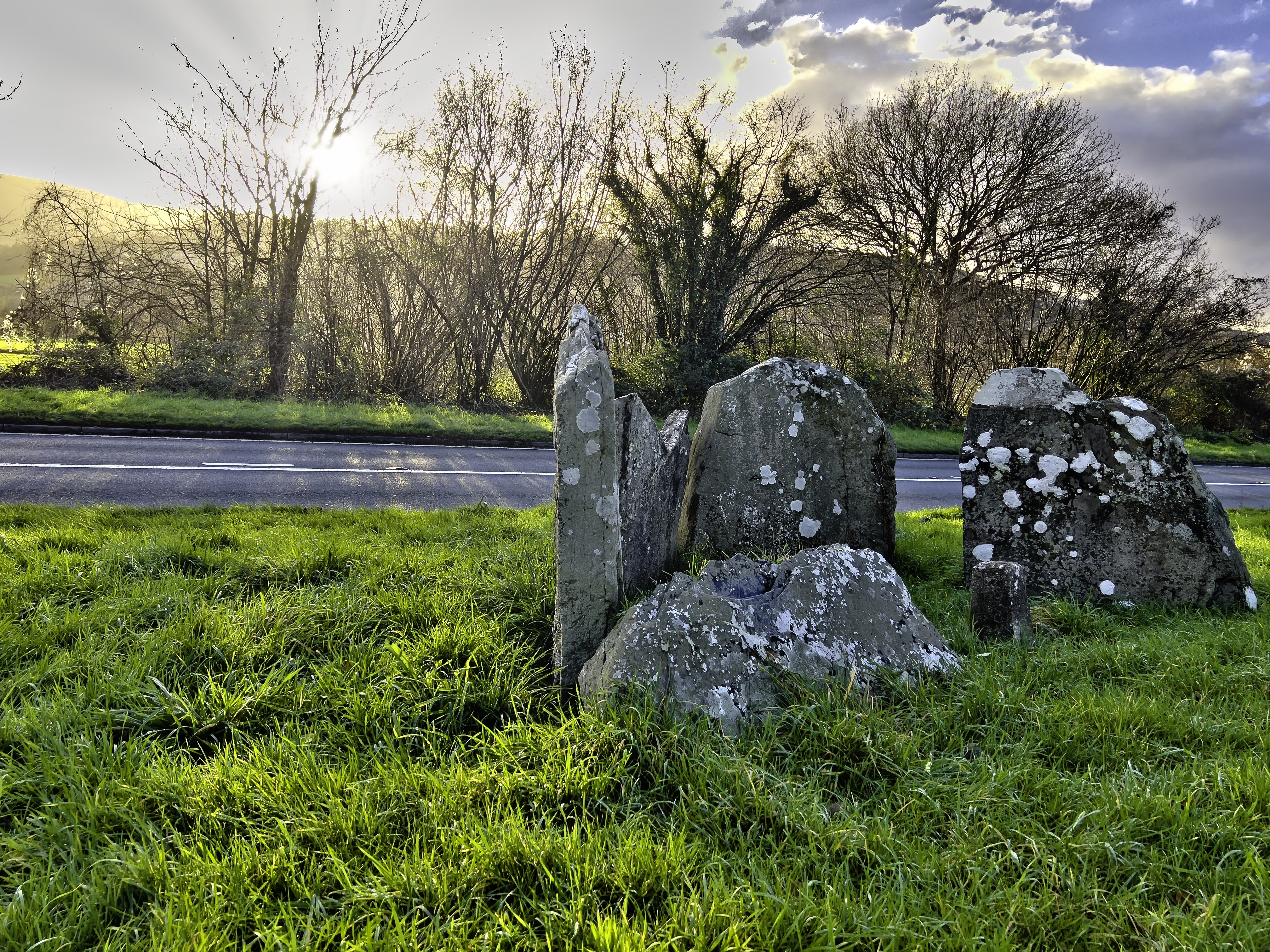
The structure seems to have grown gradually, beginning with an inner core built in stages from east to west. You can almost imagine the earliest builders raising the first section, stopping just short of where the central chambers now lie. Later, another phase extended the structure to include these chambers, before a final addition completed the mound. Around this evolving core, a rough retaining wall was first set in place, a practical solution to hold everything together.
Only once the chambers had been roofed with their heavy capstones did the monument take on a more deliberate, finished appearance. A carefully built drystone wall was then wrapped around the cairn, giving it a sense of unity and permanence. This outer wall was not uniform—thicker at the eastern end than the west—perhaps reflecting the differing height of the mound along its length. Interestingly, it stood apart from the inner core rather than being bonded into it, as though marking a boundary rather than reinforcing it.
What is particularly evocative is how this outer wall originally stretched across the chamber entrances, sealing them from view. Yet these may not have been permanent closures. The stones in front of the entrances were dismantled and replaced again and again, each disturbance likely marking a new burial. One can picture mourners returning to the tomb, carefully opening the façade, stepping into the chambers, and then restoring the barrier once more. It feels less like simple construction and more like ritual—a repeated crossing between worlds, the living entering briefly into the domain of the dead.
And yet, despite this long use, relatively few human remains were found here. At many similar sites, bones accumulated over time, earlier burials pushed aside to make room for the newly deceased, creating a mingled mass of articulated and scattered remains. At Gwernvale, this expected pattern is strangely absent.
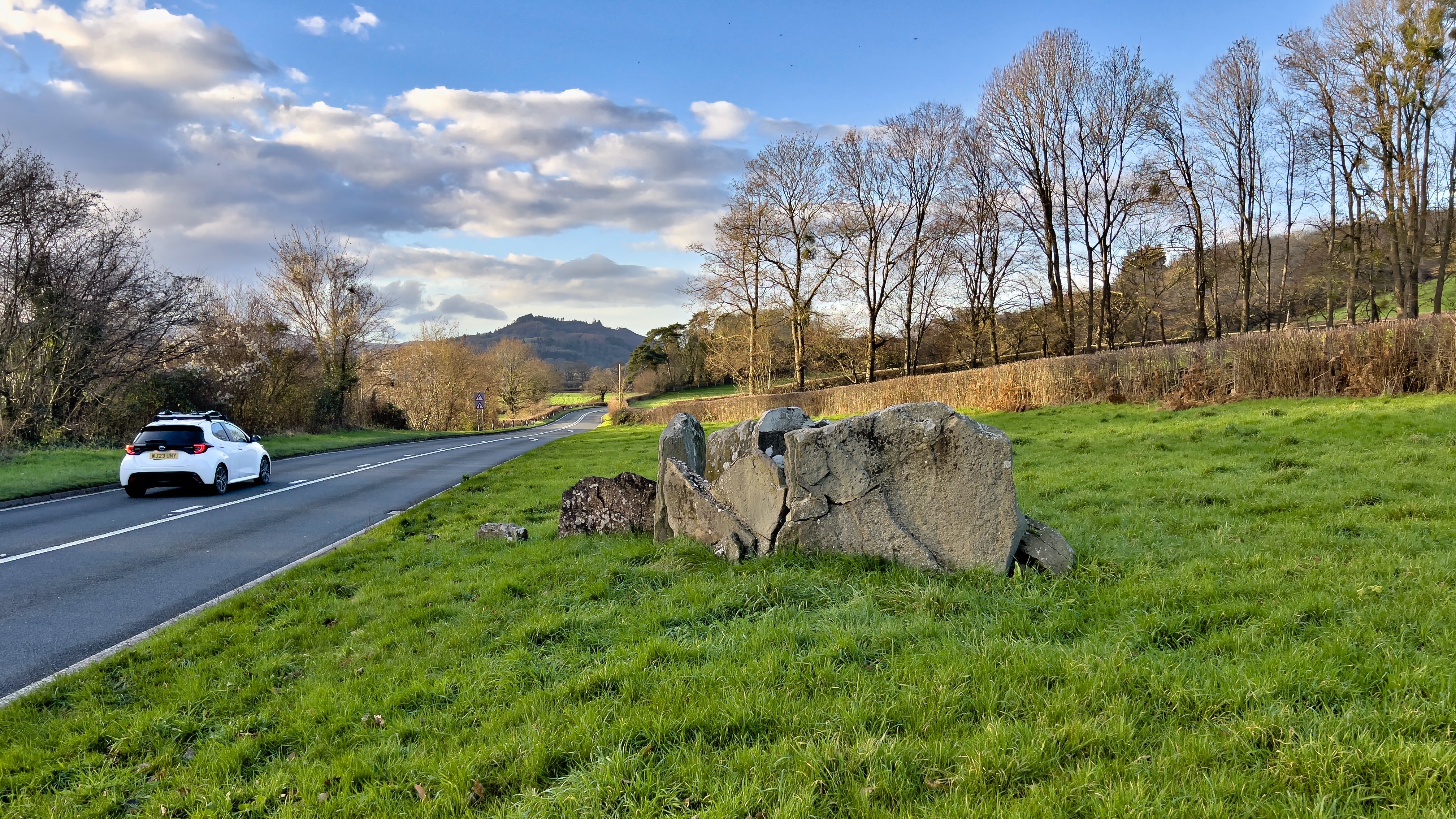
The reason may lie in what happened centuries later. After some 600 to 700 years of use, around 2500 BC, the tomb appears to have been deliberately brought out of service. The chambers were blocked, their entrances crudely sealed with stone, and much of the cairn itself was altered. Parts of the outer wall were dismantled, while other areas were reinforced with additional stone, including the forecourt. In time, these changes softened the monument’s form until it became little more than a featureless mound in the landscape.
It is tempting to think of this as a kind of closing ceremony. Perhaps the bones were removed at this stage, taken elsewhere or dispersed as part of a final act of remembrance. Pottery found within the chambers hints that this transformation occurred at a time when such tombs were already falling out of use, their traditions fading as new ways of marking the dead emerged.
Today, what remains is subtle and easily overlooked—but standing there, with the wind moving softly over the stones, it is not hard to imagine the long history of hands that built, opened, closed, and ultimately laid this ancient place to rest.
You may ask are there any myths attached to Gwernvale? Unlike some monuments that are surrounded by famous tales, Gwernvale has relatively few well-documented, specific legends recorded in the scholarly or folkloric record. That absence is interesting in itself. Antiquarian reports from the 19th century tend to note physical disturbance — removed capstones and the curiosity of locals — rather than recount elaborate stories. Yet even where a site has no single named myth, traditional landscapes in Wales are thick with shared motifs that colour how people relate to ancient mounds. Across the region, burial mounds are frequently associated in folk memory with fairies, tiny invisible peoples who live in barrows and demand caution; with giants, who were said to have thrown or left the stones; or with buried treasure and the restless spirits of the dead. Farmers and walkers sometimes treated barrows with a wary respect, avoiding interfering with them for fear of bad luck or offended spirits. Oral memories sometimes preserve the idea that local mounds marked boundary points or ceremonial places, though those memories do not always translate into a single dramatic tale.
Local imagination thus supplies a kind of living halo for Gwernvale: the sense that the place is older than recorded history, that it deserves space and reverence, and that ordinary people have long known — without needing an elaborate storybook legend — that it is a special part of the land. If you love folklore, you’ll enjoy the broader regional narratives: tales about the Black Mountains and the Usk valley, the permeability between the visible landscape and otherworldly people, and the careful etiquette with which past communities were said to be treated. If you’d like, I can dig up local oral-history collections and folklore indexes to see whether any specific Gwernvale stories survive in parish records or interviews; early fieldworkers sometimes recorded small anecdotes that never made it into academic publications.
This site is a reminder that travel sometimes means slowing down enough to listen to a landscape that does not shout — it whispers. We hurtle along the roads at 60mph, the older I get the more important it is to me to slow down and take time to appreciate the thousands years to human endeavour have Gwernvale’s whisper is powerful: communal lives remembered in stone, truncated but still legible, and a view that links past and present in one sweep. This small area of Wales has been human activity from the Mesolithic period, through the Neolithic and continuing onwards to today. A huge timespan.
Further Reading
Britnell, W. (1980) Radiocarbon dates from the Gwernvale chambered tomb, Crickhowell, Powys. Antiquity. 54 (211): 147.
Britnell, W. & Whittle, A. (Ed) (2022) The First Stones: Penywyrlod, Gwernvale and the Black Mountains Neolithic Long Cairns of South-East Wales. Oxbow Books.
Burrow, S. (2006) The Tomb Builders: In Wales 4000-3000BC. National Museum Wales Books
Child,G & Nash, G. 2001 Prehistoric Sites of Breconshire. Logaston Press.
Coflein. Gwernvale Chambered Tomb, Crickhowell, Coflein,https://coflein.gov.uk/en/site/98/ Accessed 13 Dec 2025.
Darvil, T.C. (1982) The megalithic chambered tombs of the Cotswold-Severn region Vorda Publications.
Nash, G. (2006) The Architecture if Death: Neolithic Chambered Tombs in Wales. Logaston Press.
The Stone Age tombs of south-east Wales. National Museum of Wales. https://museum.wales/articles/1311/The-Stone-Age-tombs-of-south-east-Wales/Accessed 13 Nov 2025.
Whittle, E. (1992) A Guide to Ancient & Historic Wales: Glamorgan & Gwent. London: HMSO.

 Travels With My Aunt
Leave a reply to bevnewman Cancel reply